Visualizing Logistics: A Practical Guide to Using Supply Chain Icon with Boxes and Arrows in Business Design
In the complex world of business logistics, clarity is not just a luxury; it is a necessity. Whether you are a supply chain manager presenting quarterly reports, a small business owner explaining shipping timelines to customers, or a graphic designer creating branding materials for a logistics firm, the ability to visualize movement and connection is crucial. This is where the Supply Chain Icon with Boxes and Arrows becomes an indispensable asset. Unlike generic clipart or overly complex diagrams, this specific vector illustration offers a balanced representation of interconnected processes, using colorful boxes and directional arrows to denote flow, storage, and distribution.
Understanding when and how to utilize this digital resource can significantly enhance your communication strategy. This article explores the distinct features of this illustration, compares it with alternative visual tools, and provides practical guidance on integrating it into various professional and creative projects.
Defining the Asset: What Makes This Vector Distinct?
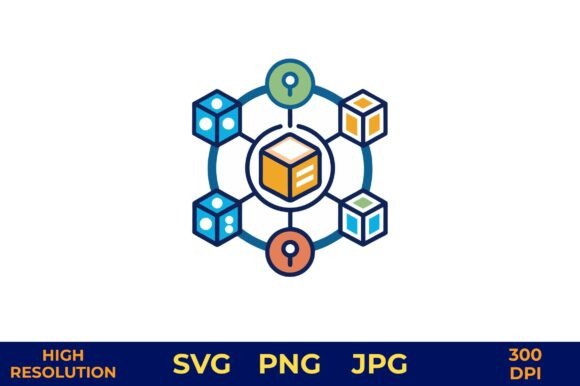
The Supply Chain Icon with Boxes and Arrows is more than a simple graphic; it is a structured visual metaphor for modern logistics. At its core, the design features interconnected boxes representing inventory, warehouses, or products, linked by arrows that signify transportation, data flow, or process progression. The use of color is intentional, helping to differentiate between stages of the supply chain—such as procurement, manufacturing, and delivery—without requiring extensive textual explanation.
What sets this specific digital product apart is its technical versatility. Delivered as a high-quality SVG, PNG, and JPG at 4200px by 4200px pixels with 300 dpi resolution, it bridges the gap between web-based simplicity and print-ready professionalism. The transparent background feature is particularly valuable, allowing designers to overlay the icon on diverse mediums—from dark-themed presentation slides to light-colored product packaging—without unsightly white borders or awkward cropping.
Comparing Visual Approaches: Icons vs. Complex Diagrams
When communicating supply chain concepts, professionals often debate between using simplified icons and detailed flowcharts. Understanding the tradeoffs between these approaches helps in selecting the right tool for your specific audience.
- Simplified Icons: The Supply Chain Icon with Boxes and Arrows excels in scenarios where immediate recognition is key. It is ideal for social media graphics, website headers, or introductory slides where the goal is to convey the concept of "logistics" quickly. Its strength lies in its aesthetic appeal and ease of digestion.
- Detailed Flowcharts: For internal operational audits or technical training, detailed flowcharts with specific data points are necessary. However, these can be overwhelming for external stakeholders or general audiences. They lack the visual punch required for marketing materials.
- Photographic Imagery: Photos of warehouses or trucks provide realism but often fail to illustrate the process or connection between steps. An abstract icon can represent the entire global network more effectively than a single photograph of a local depot.
The decision ultimately depends on the depth of information required. If you need to explain a specific bottleneck in a warehouse, a custom diagram is better. If you need to brand a logistics newsletter or create a "Thank You for Your Order" card, the vector icon is the superior choice due to its scalability and clean design.
Practical Applications Across Industries
One of the most compelling aspects of this digital download is its adaptability. Because it is a non-physical, digital product, it can be replicated infinitely across various formats without degradation in quality. Here are several realistic use cases where this illustration adds value.
Corporate Branding and Marketing
For logistics companies, freight forwarders, and e-commerce platforms, consistent branding is vital. This icon can serve as a central element in social media designs, helping to maintain a cohesive visual identity. It works exceptionally well on LinkedIn banners or Instagram posts discussing industry trends. Furthermore, it can be integrated into printable kits for trade shows, such as brochures, business cards, and pull-up banners, ensuring that the message of efficiency and connectivity is visually reinforced.
Event Planning and Corporate Hospitality
Surprisingly, supply chain visuals have a place in event decor, particularly for corporate gatherings, industry conferences, or themed weddings for couples in the logistics sector. The icon can be adapted for:
- Save the Date cards and Invitations: Using the arrows to creatively point toward the date and venue.
- Seating Charts and Table Numbers: The boxes can represent tables, while the arrows guide guests through the venue layout.
- Wedding Menus: Framing the meal courses as a "delivery" of culinary experiences.
This thematic approach adds a personalized touch that resonates with professionals in the field, turning standard stationery into a conversation starter.
Product Customization and Merchandise
With a resolution of 300 dpi, the file is print-ready for physical goods. Entrepreneurs and small businesses can use this design on mugs, t-shirts, pillows, and posters. For example, a supply chain consultant might offer branded merchandise to clients, using the icon to symbolize partnership and seamless integration. The transparent background ensures that the design looks professional on colored fabrics or ceramic surfaces, avoiding the amateurish look of poorly masked images.
Evaluating Limitations and Best-Fit Scenarios
While the Supply Chain Icon with Boxes and Arrows is a versatile tool, it is not a one-size-fits-all solution. Recognizing its limitations is essential for making an informed decision.
When it is the right choice:
- You need a quick, professional visual for a presentation or marketing material.
- You require a scalable image that looks sharp on both mobile screens and large-format prints.
- You want to convey the general concept of logistics without getting bogged down in technical specifics.
- You are creating DIY projects like scrapbooking albums or greeting cards where a thematic element is needed.
When you may need another option:
- You need to display real-time data or specific metrics. In this case, dynamic dashboard software is more appropriate.
- Your audience requires a highly technical breakdown of a specific proprietary process. A custom-drawn schematic would be more accurate.
- You are looking for a photographic representation of a specific type of machinery or vehicle. Stock photography would be more suitable here.
Technical Considerations for Digital Downloads
Since this is a digital product with no physical delivery, users must be prepared to handle file management. The inclusion of SVG, PNG, and JPG formats covers most user needs. The SVG format is ideal for web developers and designers who need to edit colors or scale the image infinitely without pixelation. The PNG format, with its transparent background, is perfect for drag-and-drop usage in document editors like Word or PowerPoint. The JPG serves as a universal backup for platforms that do not support transparency.
Users should ensure they have basic software capable of handling high-resolution images. While no advanced design skills are required to use the pre-made files, having access to tools like Canva, Adobe Illustrator, or even basic photo viewers enhances the ability to customize the icon for specific projects.
Making the Decision
Choosing the right visual assets is a critical part of effective communication. The Supply Chain Icon with Boxes and Arrows offers a balanced solution for those who need to represent logistics concepts clearly and attractively. It stands out due to its high resolution, format variety, and thematic relevance. By understanding its strengths in branding, event decor, and educational materials, and recognizing its limitations in technical detailing, you can determine if this resource aligns with your current project needs. Whether you are designing a wedding menu for a logistics expert or a corporate brochure for a freight company, this vector illustration provides a professional foundation for your creative efforts.